


“And over his head they put the charge against him, which read, ‘This is Jesus the King of the Jews’.”
Crucifixions spoke in iron words: Rome rules.
Centurions with their units of a hundred men bore witness. The commander on duty at this trial had seen other messiahs. When Rome lays down the law, he knew, mobs always turn on saviors. The empire crushes “christs.”
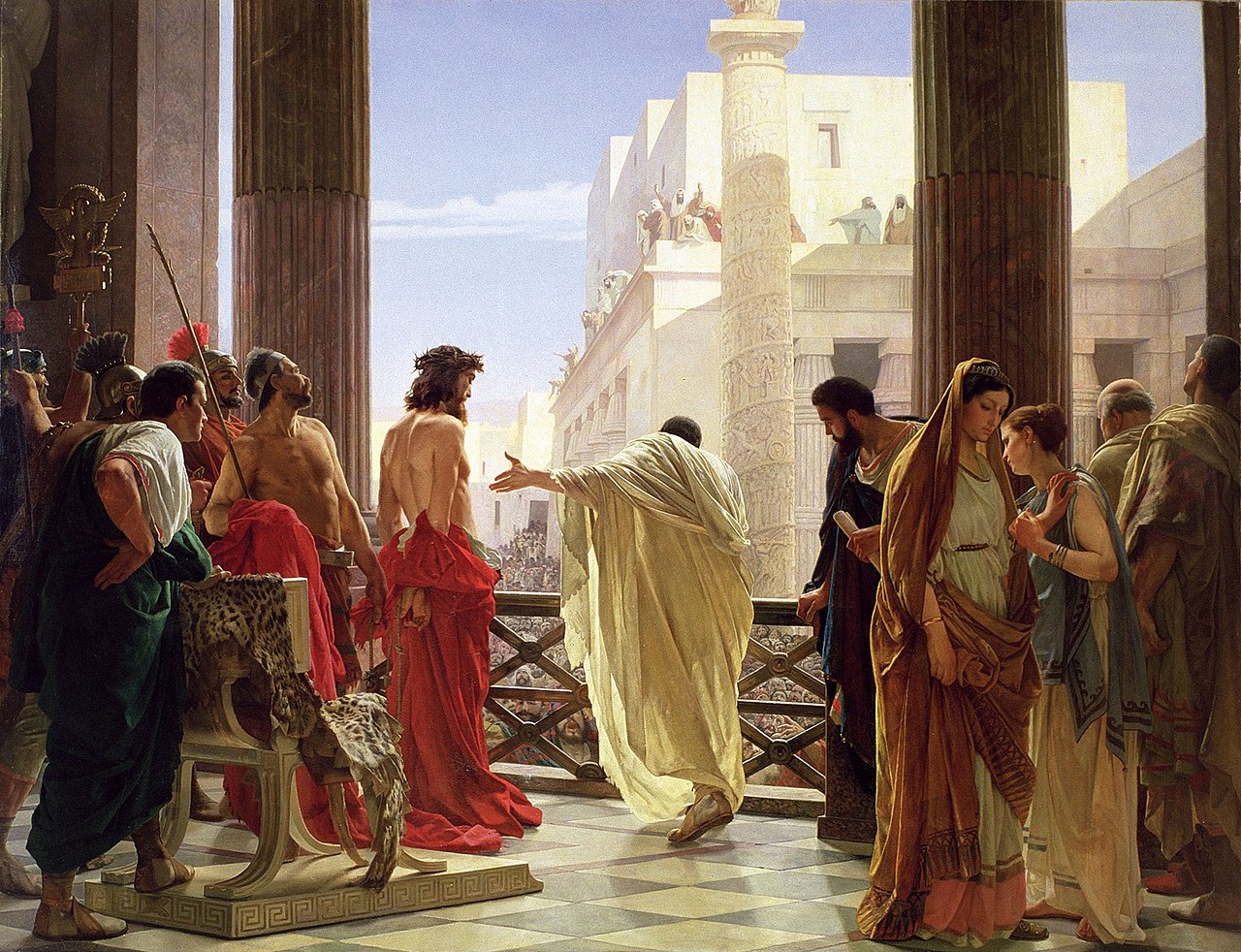
Yet he’d never seen a trial quite like this man’s. Pontius Pilate, hard as nails, for some reason wanted out.
“What evil has he done?” he questioned the accusers:
“I find no fault with this man.”
What would they would do about their king? And suddenly they thundered that they had no king but Caesar!
The centurion may have smiled at this, but Pilate washed his hands. And then he ordered scourging. The commander barked and it was done: “king’s” back whipped to ribbons.
A frenzied soldier grabbed a scarlet robe and cloaked the battered king. Another said, a crown! They pressed thorns in the scalp. And how about a scepter? A dried up reed, my Lord! Their jeers grew crazed and bitter as they knelt before that man.
A blindfold for the prophet, then their fists. Your majesty, who hit you? And silence the reply.
Rome’s right again: let’s lead him to his death.
The crossbeam pressed into his torn and battered back, but this man showed a strange persistence as he struggled up the hill. Even as he stumbled, he didn’t seem defeated.
The commander forced a stranger into service: hoist it up. The helpless “king” accepted it but clutched his cross the more. They stripped his body bare and he showed no trace of shame. Except, perhaps, for them, the soldiers may have wondered.
He took the nails they pounded in, and not one curse word came. Instead, a prayer: “Forgive them, they do know not what they do.”
Forgive? For what? Was this man mad?
Or had Rome got it wrong?
They raised the cross and watched him gasp. He cried out to his Father; gave his mother to a friend. Then it was time to break his legs and hurry up the death. The soldiers did this job with glee, a victory for Rome.
But he was gone already. He offered up his life.
The centurion watching all this grabbed his lance and with fierce strength he thrust beneath the ribs.
He stabbed the heart of innocence and in a holy twist he knew this was the Son of God.
Conversion at the death of Christ; a truth counter to Rome.

The sky accused empire as daylight was snuffed by darkness.
The commander didn’t know it then, but hope was in that death. Jesus of Nazareth would rise. Rome could not rule this King.
The soldier’s name is given in tradition: Longinus– the centurion who pierced the heart of Christ. He later left Roman command. He is a Christian saint.
We have no king but Ceasar? No. We have no king but Christ.


Know someone who would enjoy this post? Please share Sparrowfare! Subscribe here and stay in touch!
You might also enjoy How to Speak of Easter Joy without Harming the Humble Christ and Gospel Historicity and Resurrection Hope.
This Good Friday conversation on the Passion and Resurrection sections of Handel’s Messiah is not to be missed!

Photo by Wim van ‘t Einde on Unsplash. Art courtesy of Wikimedia Commons.